Near the end of the fifteenth century, a young explorer tripped and dropped through a hole into the buried chambers of Nero’s Domus Aurea, whose walls teemed with all types of impossible combinations: human limbs becoming foliage, animals dissolving into ornament, all of them uninterested in respecting the categories by which the world was ordinarily arranged. The rooms, long underground, had acquired the character of grottoes and the frescoes covering the walls were dubbed grottesche – from a cave. The word then migrated from the space to what inhabited it, and from there into something broader. Ever since, the grotesque has appeared with curious persistence whenever established orders begin to lose their authority, surfacing in moments when reality becomes crowded with competing fictions and contradictory truths.
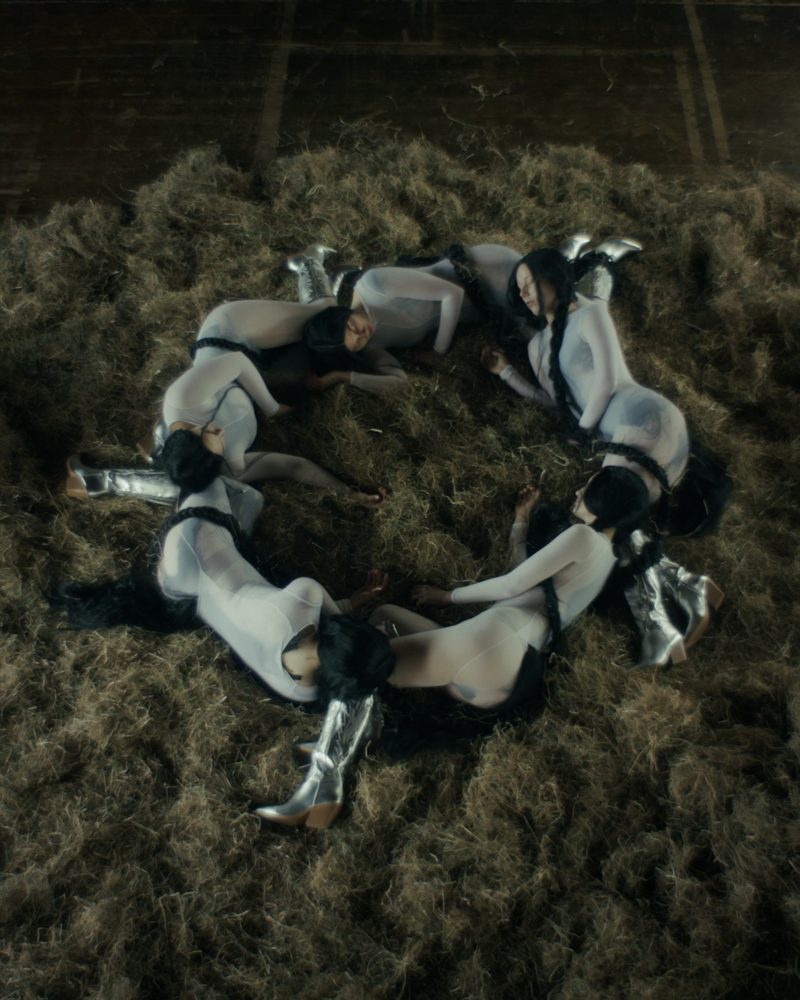
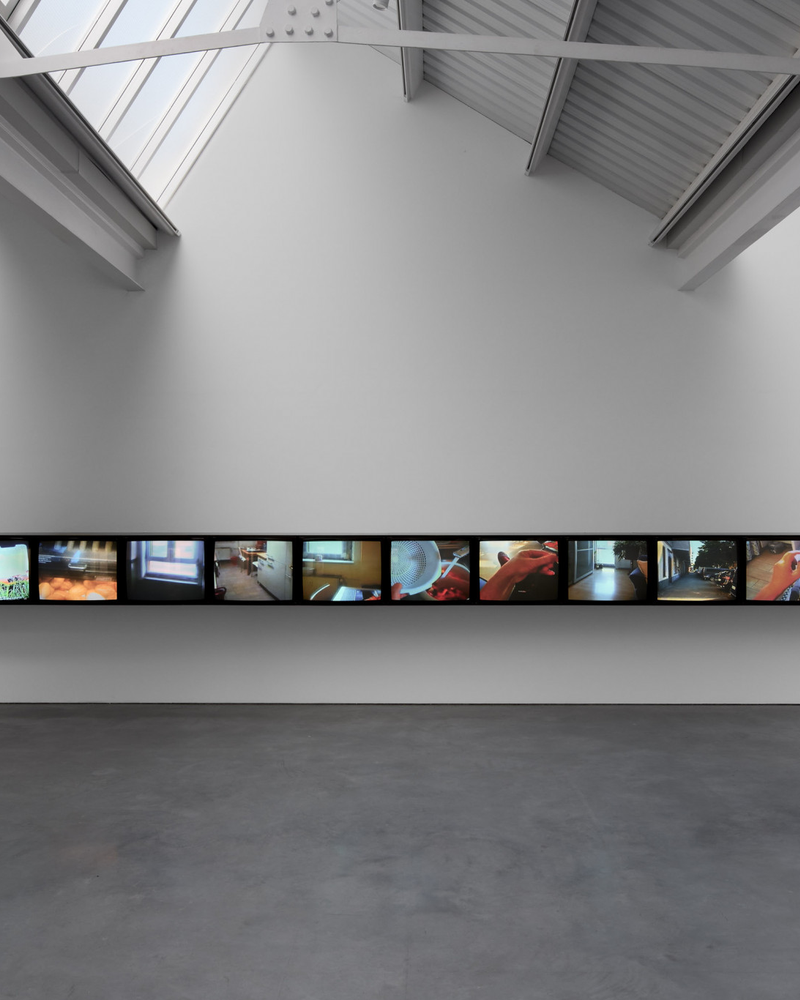
Such conditions feel uncannily familiar today, in a world where carnivalesque authoritarianisms have become the new monsters and reality and fiction dissolve into an AI-generated broth, which perhaps explains the apt timeliness of New Grotesque, at Management, New York. Bringing together fifteen artists across generations, the exhibition unfolds as a dense ecology of mutations, doubles, apparitions and hybrid beings, establishing an anomalous world in which rationality and irrationality occupy the same address. If the grotesque has mutated through the endless circulation and amplification of images, the works in the show (through until 26th July) seem particularly attuned to what happens afterwards, once those images begin shedding their original contexts and acquiring unexpected new lives.
This traffic between visual worlds becomes especially compelling in the dialogue that emerges between Aleksandra Waliszewska and Jon Rafman. The former’s gouaches on paper draw from fairy tales, Symbolism and the dark logic of dreams; the latter’s images generate through contemporary technologies of simulation and image production. Yet both produce visions that seem detached from any stable origin, as if they had been circulating for much longer than their actual histories would allow.
The logic of improbable negotiations between the ordinary and the impossible recur throughout the exhibition. In Tura Oliveira’s epoxy and silver sculpture, Alien Martyr, Id Occupier (2026), two heads joined at the neck seemingly belong to different ontological registers: one almost elegant in its alienness, the other all exposed flesh and interiority, as though the creature’s hidden anatomy had turned outward. Sinister doubling evidently belongs to the grotesque’s engine and animates also Altmejd’s Smoking with Oneself (2021- 2026), extending the exhibition’s fascination with forms that refuse singular identities, rather preferring a paradoxical coexistence.
The exhibition does not miss addressing the psychopathological terrain of the present, excavating a wunderkammer of anxieties populated by ghosts from horror cinema, internet culture, religious iconography and fantasy illustration. Linda Marwan’s gremlinian mutants Chimeras (Tatzelwurm, Annalise), 2025 refuse to separate these references into neat categories. Emerging from a visual universe shaped by gaming culture and online aesthetics, they carry with them the unsettling familiarity characteristic of so much grotesque imagery. In Remake, reshoot, reprise: the world restarts with you, 2026 Andrew Roberts’ severed forearm, neatly packed inside a blue suitcase, introduces a more concrete register of horror. Drawing from histories of monstruosity while adhering to contemporary structures of violence, Roberts’ work evokes systems built upon militarised borders and the persistent spectres inhabiting the relationship between Mexico and the United States. A nod to the idea that the grotesque iconography has never existed independently of the worlds that produce it.
Other works expose the body in its fragilities, leaks, horrors, and desires, including Miriam Cahn’s drawings. Suspended between presence and disappearance, her eerie figures surface from the paper with an extraordinary economy of means. Amid the exhibition’s many mutations and transformations, they seem to exist almost as witnesses, observing a world in which categories have become increasingly porous and certainty increasingly difficult to maintain.
This porosity may be what ultimately binds New Grotesque together. The grotesque, after all, has never been merely a matter of distorted bodies or monstrous forms. Fringing the affections and desires of fandom, folklore and collective memory, this disquietingly effective exhibition engages with visible and invisible grotesqueries from different moments in cultural history and speculatively reanimates them. At the same time, it demonstrates that monsters per se are rarely the source of our unease. Far stranger are the conditions that produce them. Far stranger are the moments when fiction and reality begin exchanging masks.


New Grotesque
Management
David Altmejd
Tim Brawner
Miriam Cahn
Willehad Eilers
Christina Forrer
DD Herschlein
Linda Marwan
Tura Oliveira
Jang Pa
Jon Rafman
Andrew Roberts
Sibylle Ruppert
Igor Simic
Inna Smolina
Aleksandra Waliszewska
June 12 — July 26, 2026
Text by
Marco Galvan
Credits: Installation view Management. Courtesy of Management, New York.
Photo by Inna Svyatsky/installshots.art