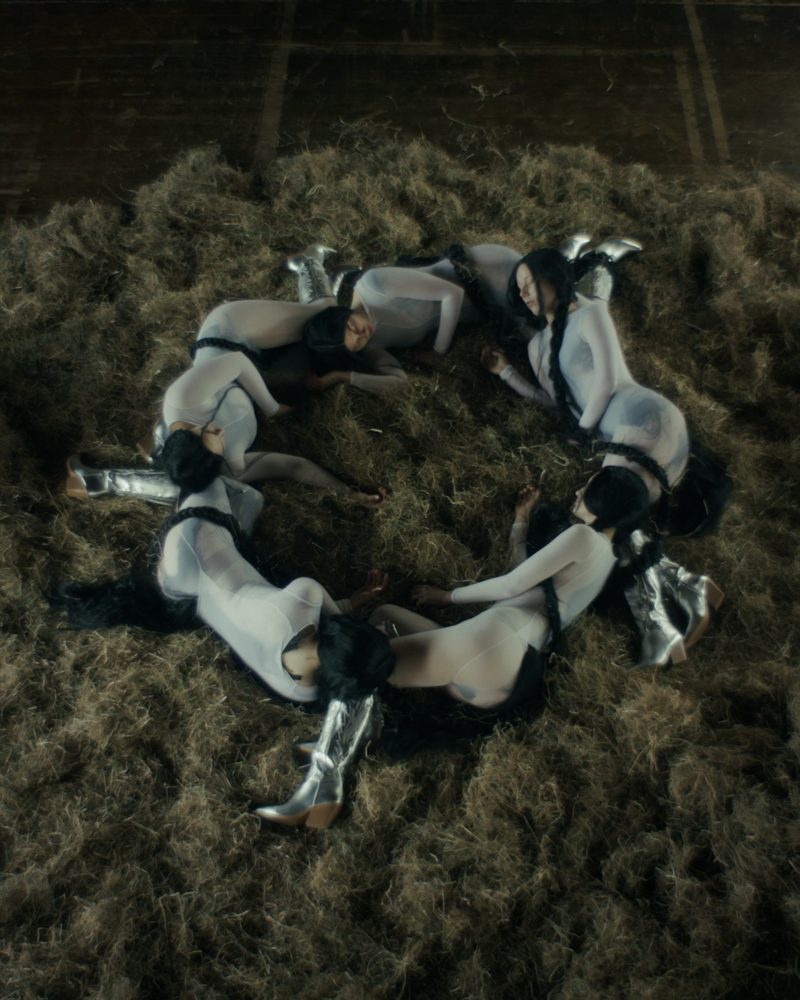
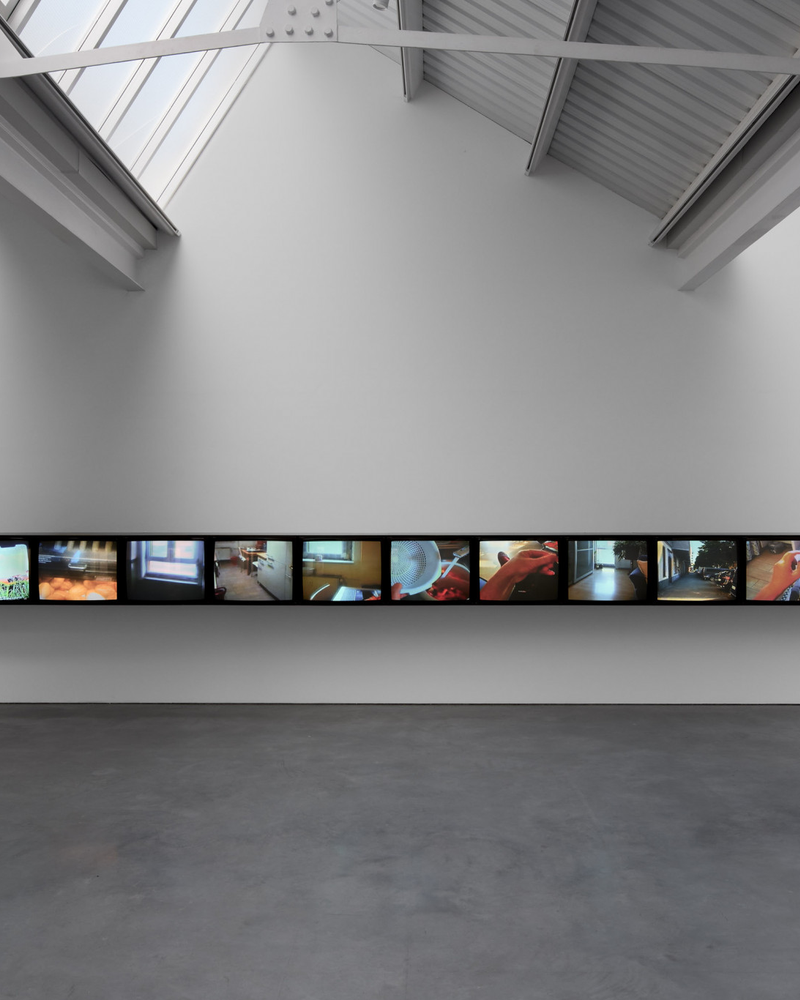
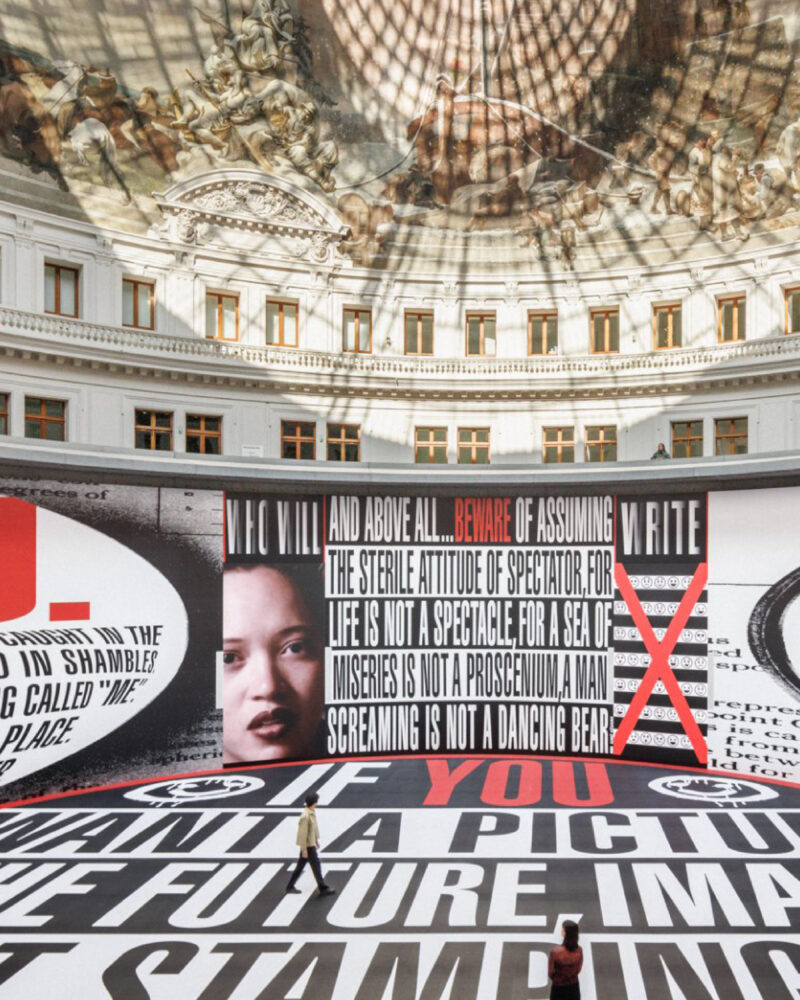
Developed during an artist residency at Trullo Ulìa in collaboration with Monti8, Sun-kissed, Red Soil, Salt Skin explores the relationship between queer archives, landscape and contemporary forms of inhabiting Southern Italy.
Sun-kissed, Red Soil, Salt Skin is a physical condition through which to read a territory, the bodies that move through it, and the images that emerge from it. The project takes shape within Trullo Ulìa, in the countryside surrounding Ostuni, where the landscape does not function as a backdrop but rather as a site that transforms behaviour, alters the perception of time and reshapes the quality of relationships. Sun, earth and salt become narrative and sensory elements, tools through which Pacifico Silano constructs a reflection on desire, memory and the contemporary possibility of inhabiting the South.
The red earth of Puglia’s Valle d’Itria, the blinding light, the limewashed white of its rural architecture, the dust settling on bare feet after the sea; everything within this project belongs first to a tactile rather than a visual dimension. The image does not arise from the distant contemplation of the landscape, but from physical immersion within it. It is a South that enters the body before it reaches the gaze.
Within this framework, Trullo Ulìa assumes a central role, not simply as the place hosting the residency, but as a cultural device and a critical space. Ulìa’s project deliberately distances itself both from vernacular nostalgia and from the touristic aestheticisation of the Apulian countryside. Its approach to dwelling begins with the observation of the spontaneous architecture of the Valle d’Itria: trulli, lamie and rural extensions built primarily during the second half of the twentieth century, when farmers, driven by practical needs and aspirations towards modernity, began adding new volumes to older structures without any form of academic mediation.
These apparently modest interventions, however, reveal a decisive moment in Southern Italy’s rural culture: the desire to emancipate everyday life from the exclusive sphere of agricultural labour through the introduction of small gestures of domestic representation, arches, decorative roof tiles, coloured plasterwork and ornamental details that gradually distinguished the house from the simple storage building or the architecture of labour itself.
This tension between necessity and desire, pragmatism and aesthetic aspiration, is deeply embedded in Silano’s practice. Long engaged with photographic archives, queer memory and the emotional reconstruction of images, his work finds in Trullo Ulìa an ideal terrain for dialogue. Rather than documenting a place, the artist uncovers its cultural and symbolic stratifications, investigating the relationship between interior and exterior, intimacy and landscape, body and architecture.
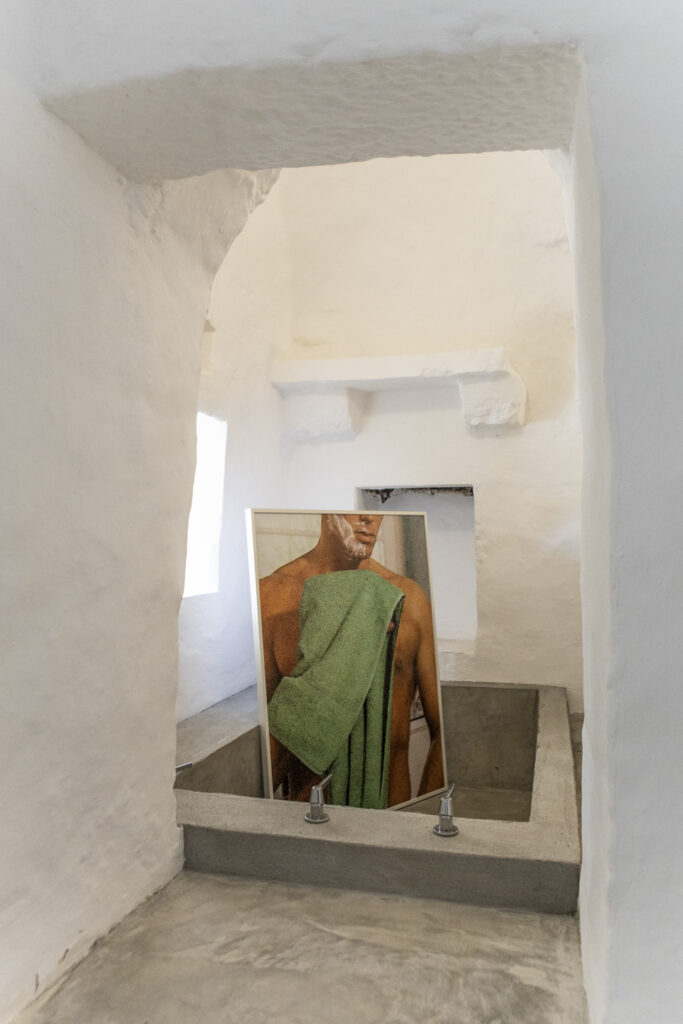
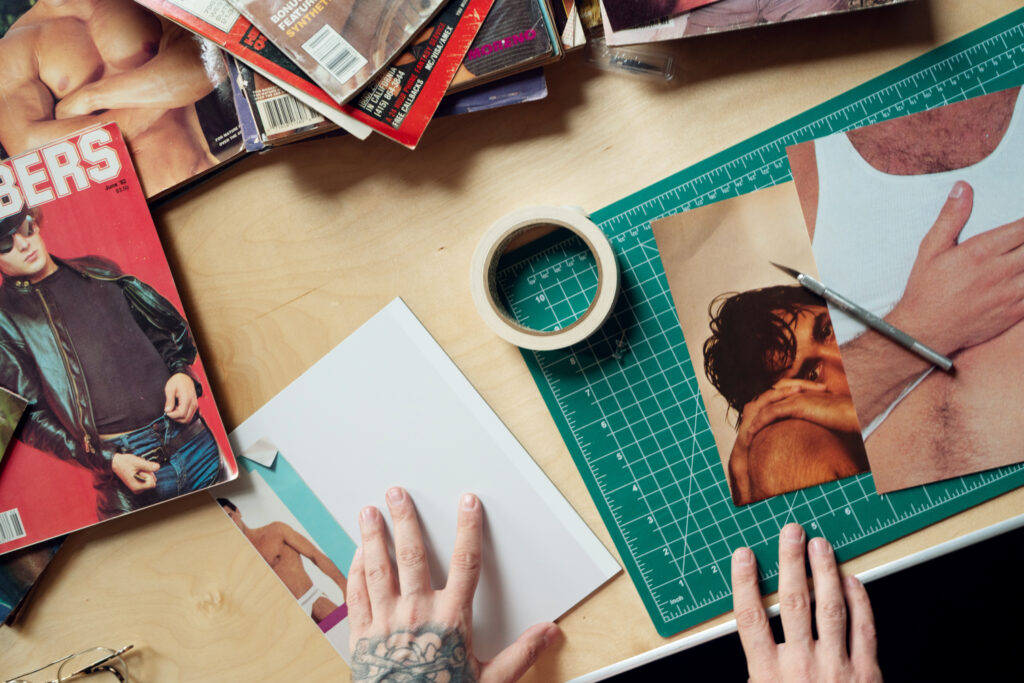
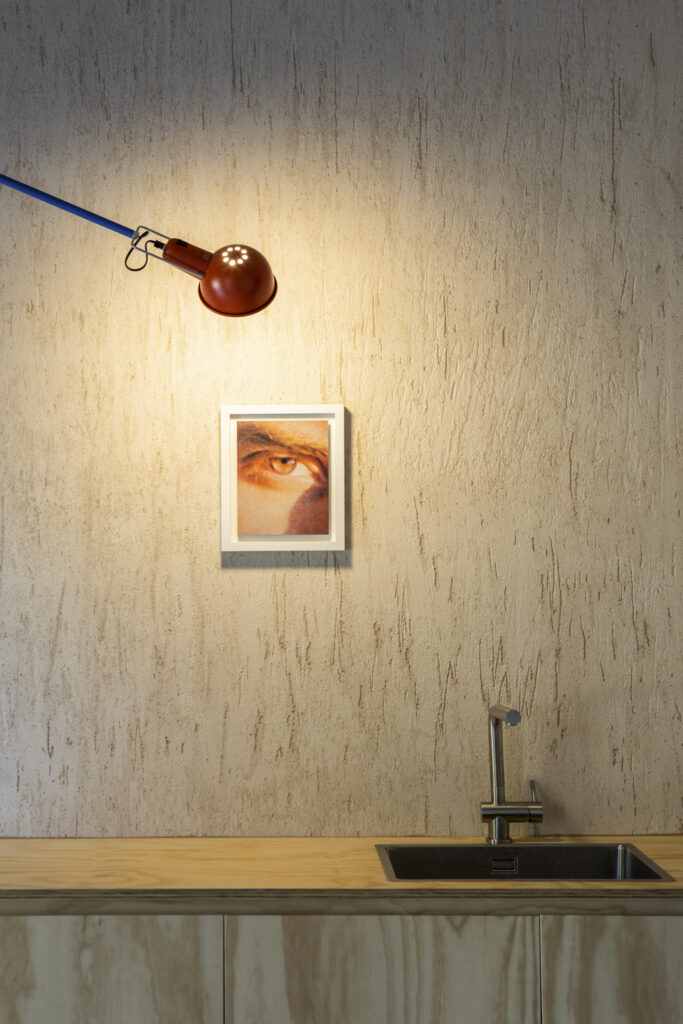
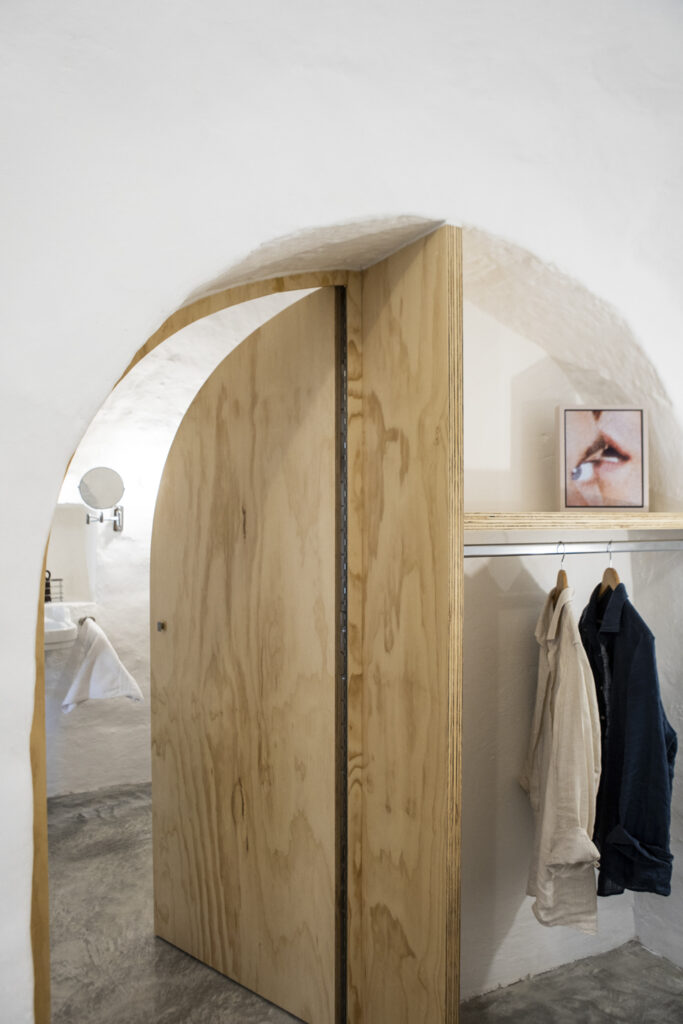
A fundamental aspect of Pacifico Silano’s practice, and one that lies at the heart of Sun-kissed, Red Soil, Salt Skin, concerns the way he constructs images through the photographic archive. The photographs he appropriates, often sourced from magazines, erotic publications and printed material from the 1970s and 1980s, are never treated as static documents or nostalgic relics. Instead, Silano intervenes through processes of montage, layering, cropping and juxtaposition, radically altering the original meaning of his source material.
The titles of his works frequently play an equally decisive narrative role. Rather than simply describing what is visible, they open alternative interpretative trajectories, redirecting the image towards unexpected emotional, political or autobiographical territories.
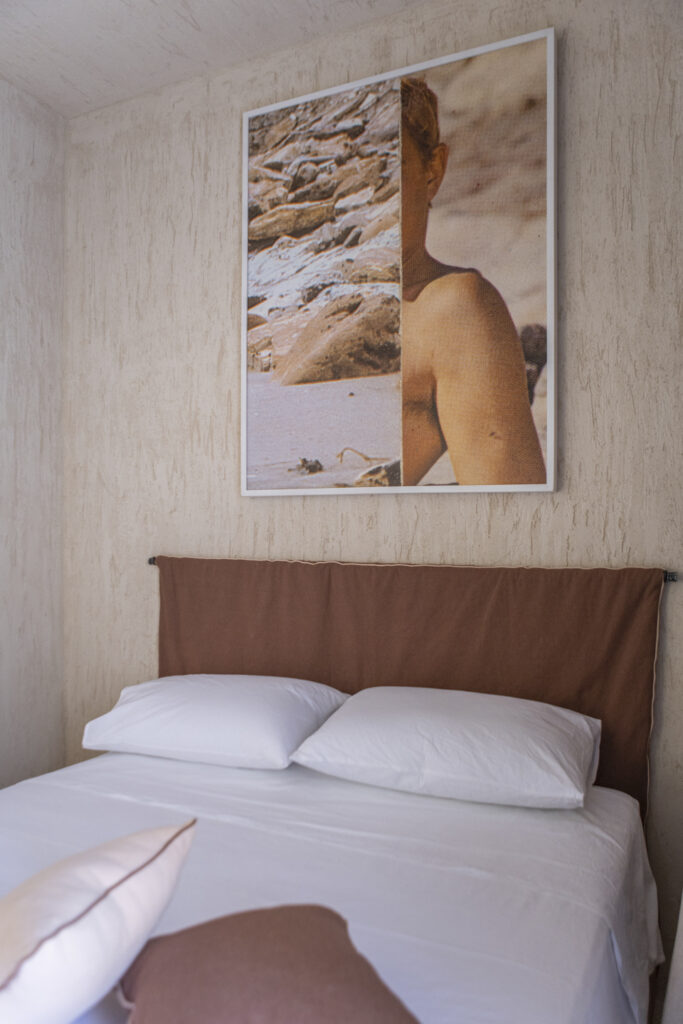
Stratification remains one of the defining characteristics of his artistic language. Multiple images inhabit the same photographic work without ever fully merging; the frictions, interruptions and temporal seams between one fragment and another remain deliberately visible. Likewise, his diptychs and visual pairings continuously produce shifts in meaning: one image rebalances another, destabilises it or completes it, generating readings that were never present within the original material. Through this process, the archive ceases to function as a closed memory of the past and becomes reactivated within the present. Images produced fifty years ago are not simply recovered; they are translated into a contemporary sensibility charged with emotional and affective resonance.
It is impossible not to recognise how closely this methodology mirrors the architectural work undertaken at Trullo Ulìa itself. Here too, one encounters a process of temporal stratification and coherent rewriting. The restoration of the property does not erase its rural origins, nor does it attempt to transform it into a neutral or abstractly contemporary object. On the contrary, Ulìa deliberately preserves the visible traces of the different historical moments that have shaped the site: the original sixteenth-century Saracen trullo; the spontaneous additions made during the second half of the twentieth century; the vernacular details introduced by local farmers in their efforts to modernise domestic space; and, finally, the most recent interventions connected to a renewed understanding of cultural hospitality and artistic residency.
The vocabulary changes, yet the narrative remains remarkably coherent. Just as in Silano’s work, the past is neither museumised nor romantically preserved. Instead, it is revisited, reassembled and translated into a language capable of belonging fully to the present without relinquishing its own memory. Temporal overlaps therefore become an integral component of the site’s identity. Contemporary interventions do not erase its agricultural past, just as artistic intervention never conceals the provenance of the image. In both cases, what matters is sustaining the productive tension between different temporalities, allowing time itself to remain visible as a layered surface.
It is precisely here that the decision to invite Pacifico Silano to work at Trullo Ulìa reveals itself to be not only coherent, but deeply significant. The dialogue between artist and place is grounded in a shared methodology: both operate through practices of recovery and transformation; both construct the present without erasing their origins; both understand that identity is never fixed, but rather the outcome of continuous cultural, emotional and temporal stratifications.
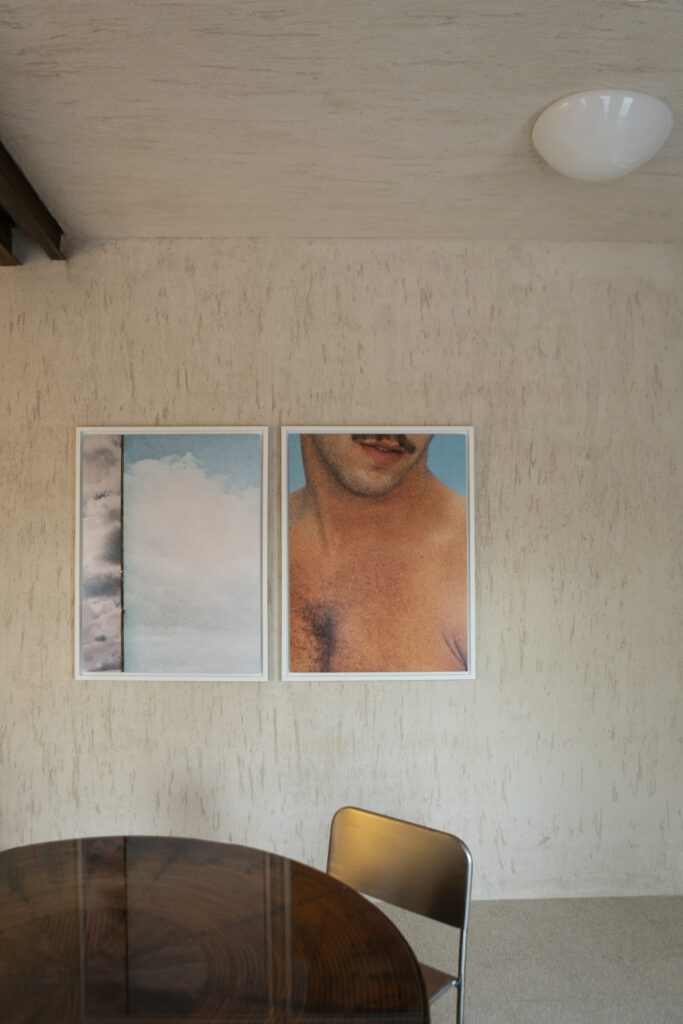
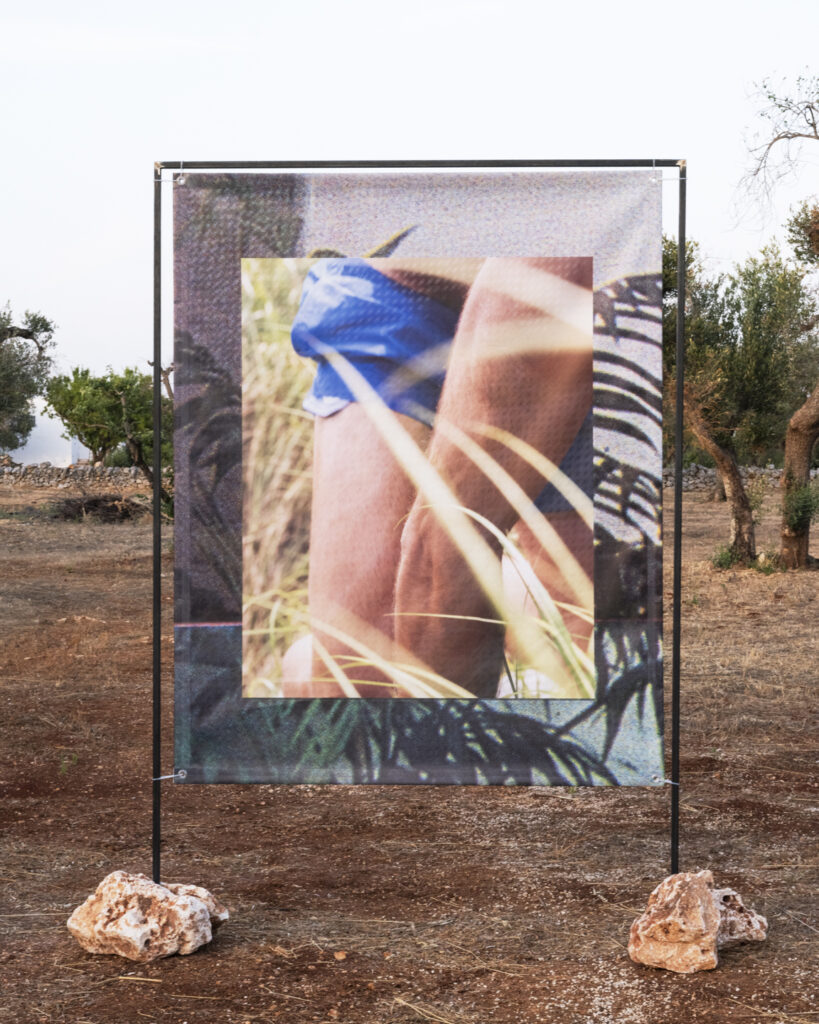
This parallel becomes even more evident through the residency process itself. A fundamental component of the project is devoted to the production of new photographs taken throughout the landscape surrounding Ulìa, along the country road leading to the sea and across the nearby beaches. Young men from the local area were photographed by Silano adopting the same poses, compositional framing and visual grammar found in the archival images that had already informed the works conceived prior to the residency.
The result is an extraordinarily subtle temporal short circuit: contemporary bodies physically enter the photographic imagination of the past, while images from decades earlier finally encounter a tangible correspondence within the very landscape that had unconsciously generated them in the artist’s imagination.
It is important to emphasise that many of the works conceived by Silano for Trullo Ulìa were developed before his arrival in Puglia. The project initially unfolded through an epistolary relationship, an exchange of stories, photographs, videos, atmospheric references and descriptions of everyday life within the territory. Before encountering the place itself, Silano had already constructed its emotional geography. The Apulian countryside first existed as a desired image, an affective projection, a landscape imagined across distance. His physical arrival at Ulìa does not interrupt this process; rather, it simultaneously completes and unsettles it, allowing the real territory to enter into dialogue with the one previously imagined.
In this sense, the residency also becomes a reflection on the ways in which places are continually constructed through images, desires and shared narratives. Silano’s Puglia belongs neither to folklore nor to tourism. Rather, it is a Puglia mediated by the archive, by queer imagination, by cinematic memory, by the iconography of the Mediterranean and by the lived experience of inhabiting a place collectively. Photographing local young men in the same poses as the models appearing in vintage photographs therefore becomes an act of superimposing different temporalities without hierarchy, collapsing the distance between archive and present, between memory and lived experience.
The male body occupies a central position within this project, not as a heroic or performative figure, but as a vulnerable presence. It is a body that sleeps, sweats, gathers dust, desires and moves through the landscape without ever fully separating itself from it. The queer dimension of the project never appears as an explicit ideological statement; instead, it emerges as a sensitive practice of inhabitation. Queer is the way intimacy is built through shared rituals. Queer is the suspension of productive time. Queer is the possibility of transforming a rural space traditionally associated with the patriarchal family into a site where other forms of relationality and belonging can emerge.
The sea likewise becomes a profoundly corporeal element within this construction. Its karst coastline, with its sharp white rocks, wind-carved coves and salt water that lingers on the skin until nightfall, introduces another understanding of Mediterranean sensuality: not the polished hedonism of luxury tourism, but a rough, tactile sensuality. Returning from the sea without showering, sitting down to dinner with salt still drying on the skin, allowing the evening air to slowly complete what the water has begun.
The entire project ultimately constructs a reflection on the Mediterranean as a space of slowness and transformation. It is not a mythical or nostalgic Mediterranean, but a contemporary one, shaped by tensions between tourism and authenticity, rurality and cosmopolitan desire. Within this context, Trullo Ulìa does not function as a refuge, but as a laboratory for new forms of inhabitation, where architecture, art and everyday life continually intersect, contaminate and reshape one another.
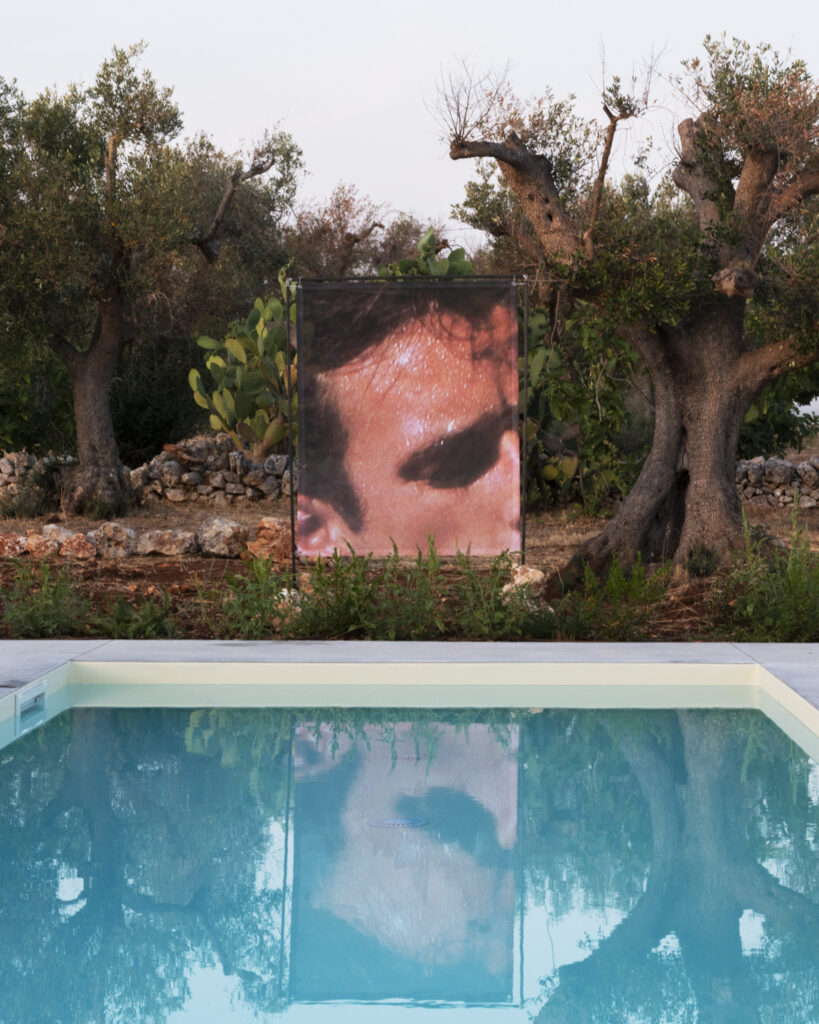
From July 19 to August 21, Trullo Ulìa is open for visits by appointment only.
MONTI8 in collaboration with Trullo Ulià.
Institutional partner: Fondazione Pino Pascali
Credit: Trullo Ulìa
PACIFICO SILANO
Born in 1986 in New York, lives and works in New York
2012 MFA in Photo, Video and Related Media: School of Visual Arts, New York, NY. 2008 BFA in Photography: Pennsylvania College of Art & Design, Lancaster.
2025 Assume The Position, Monti8, Rome, IT 2025 Artefiera 2025, Bologna, solo booth
Elegy to The Void, Curated by Eric Shiner, New York, NY 2024 Psychosexual Thriller, Island Gallery, New York, NY 2023 Sweetest Kill, Monti8, Rome, IT
2022 Men Play Games, Luis De Jesus Gallery, Los Angeles, CA
If You Gotta Hurt Somebody, Please Hurt Me, Rubber-Factory, New York, NY (2 Location Solo Show) If You Gotta Hurt Somebody, Please Hurt Me, Fragment Gallery, New York, NY (2 Location Solo Show) Don’t Worry Baby, Monti 8, Latina, Italy
2021 Cowboys Don’t Shoot Straight ( Like They Used To), Houston Center for Photography, Houston, Texas Miart, Milano, duo show
2020 I Won’t Last A Day Without You, Melanie Flood Projects, Portland, OR Time to Come, The Eye Sees, Arles, FR
The Eyelid Has Its Storms…, Light Work, Syracuse, NY 2019 Fragment Gallery at NADA MIAMI, Miami, FL
Time Is An Ocean But It Ends At The Shore, Rubber-Factory, New York, NY Fragment Gallery at Sunday Art Fair, London, UK
How To Disappear, Fragment Gallery, Moscow, RUS
Speaking Little, Perhaps Not A Word, Bronx Museum’s Block Gallery, New York, NY After Silence, Pennsylvania College of Art & Design, Lancaster, PA
2024 Fountainhead Artist Residency, Miami, FL
2021 The Paris Photo / Aperture Foundation Shortlist for First Book Prize The Rencontres d’Arles Book Award Shortlist for Artist Book of the Year
The Silver List, Silver Eye Center for Photography, The Black List, Carnegie Mellon 2020 Silver Art Projects Studio Residency
2019 Bronx Museum of the arts, AIM AT 80 White Street Artist Residency 2018 BRIC Media Arts Fellowship