From Como to Lecco, the eighth edition of Lake Como Design Festival explores the border as a space of encounter, transformation and exchange, bringing together contemporary design, archives, education and new ways of reading the territory.
From 12 to 20 September 2026, Lake Como Design Festival returns for its eighth edition with Border, a programme that questions the very idea of boundaries, not as fixed lines of separation, but as spaces where different languages, disciplines and territories can meet.
This year, that premise becomes tangible. For the first time, the festival moves beyond Como and its lake to reach Lecco, extending its geography while establishing new relationships with universities and higher education institutions across the region. It is a significant shift for an event that has always used the territory itself as one of its principal curatorial tools.
Rather than approaching Border as a single theme to be interpreted literally, the programme reveals its multiple meanings. Boundaries emerge between past and future, art and design, human and non-human systems, craftsmanship and technology, centre and periphery. They also appear as social and political conditions, questioning accessibility, belonging and the ways in which contemporary design participates in shaping collective life.
The archive as a place for the future
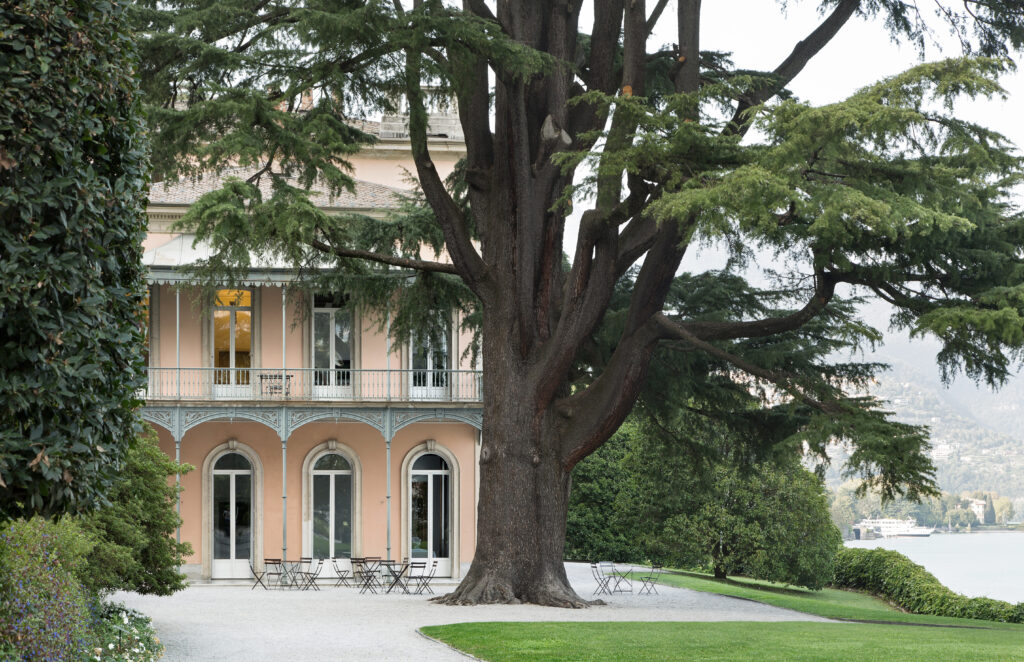
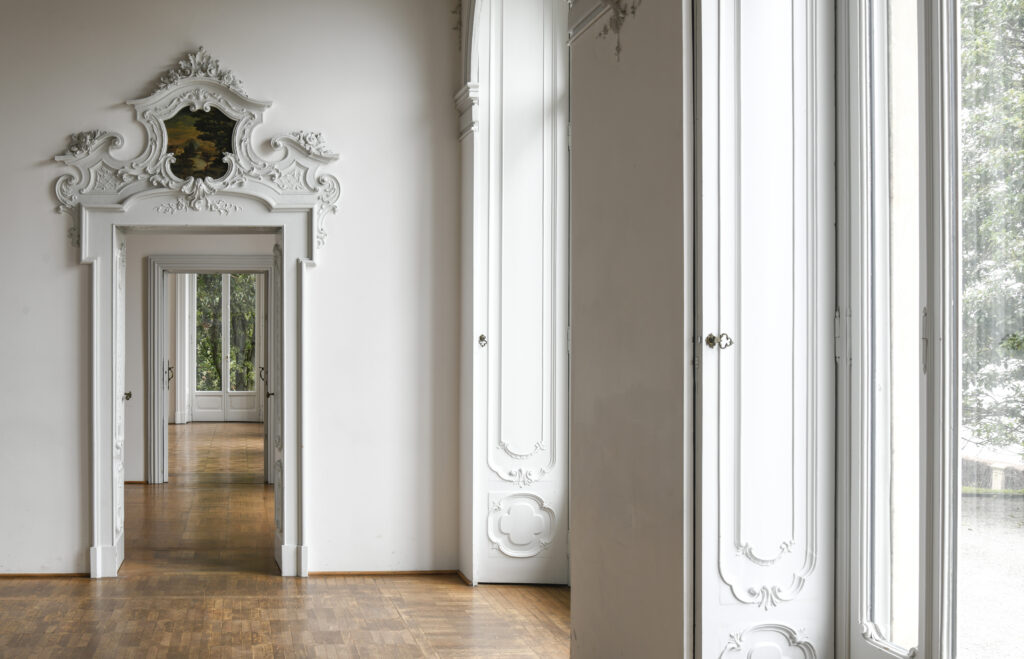
At Villa del Grumello, one of the festival’s recurring locations, Future in the Past looks at perhaps one of the most productive borders in contemporary design: the relationship between memory and innovation.
Here, the archive is not treated as something static, but as a living repository from which new forms can emerge. Historical knowledge, manufacturing traditions, drawings and unrealised ideas return to the present through a series of different approaches.
Among them, Lupo Borgonovo’s Disegno Nomade draws on buckles once belonging to the nomadic peoples of Eurasia, while the work of AG Fronzoni enters into dialogue with his Collezione 64. Designer Nicolò Spinelli and the historic woodworking atelier Simonetto intervene within the villa through an architectural project designed by Elisa Ossino, while Etel focuses on another fundamental genealogy of modern design through the furniture of Lina Bo Bardi.
The exhibition also moves through Mediterranean vernacular architecture with Proporzione Mediterranea, conceived by Annarita Aversa and curated by Giustini Stagetti Gallery, while the Carla Badiali Archive presents drawings connected primarily to the artist’s collaborations with Hubert de Givenchy and Pierre Balmain.
What connects these apparently distant practices is an understanding of history as something unfinished: material to be revisited, questioned and transformed.
More than fifty voices at Villa Saporiti
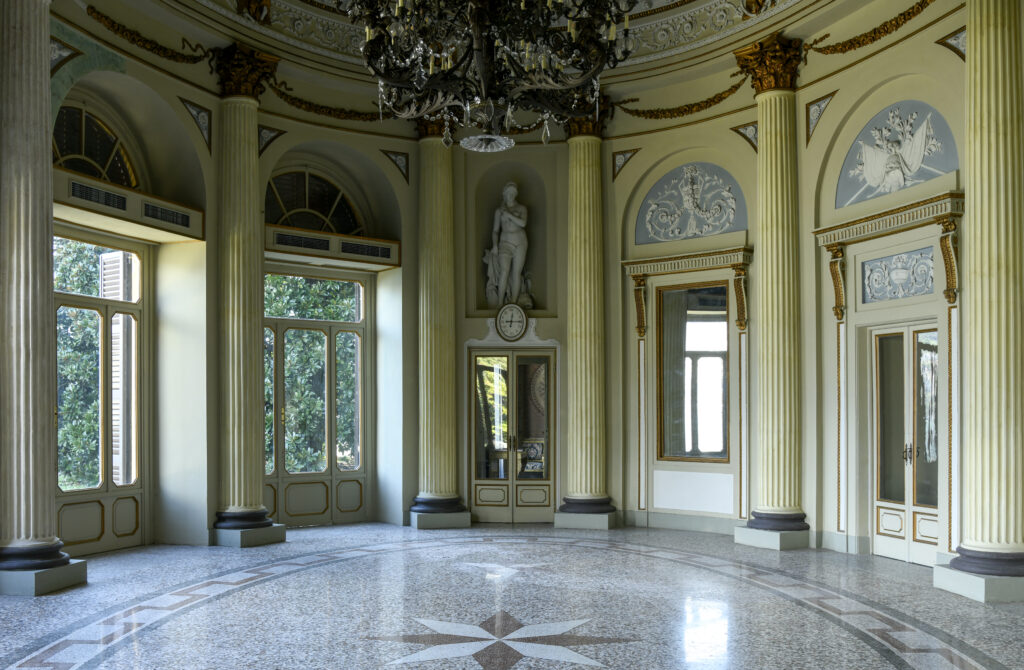
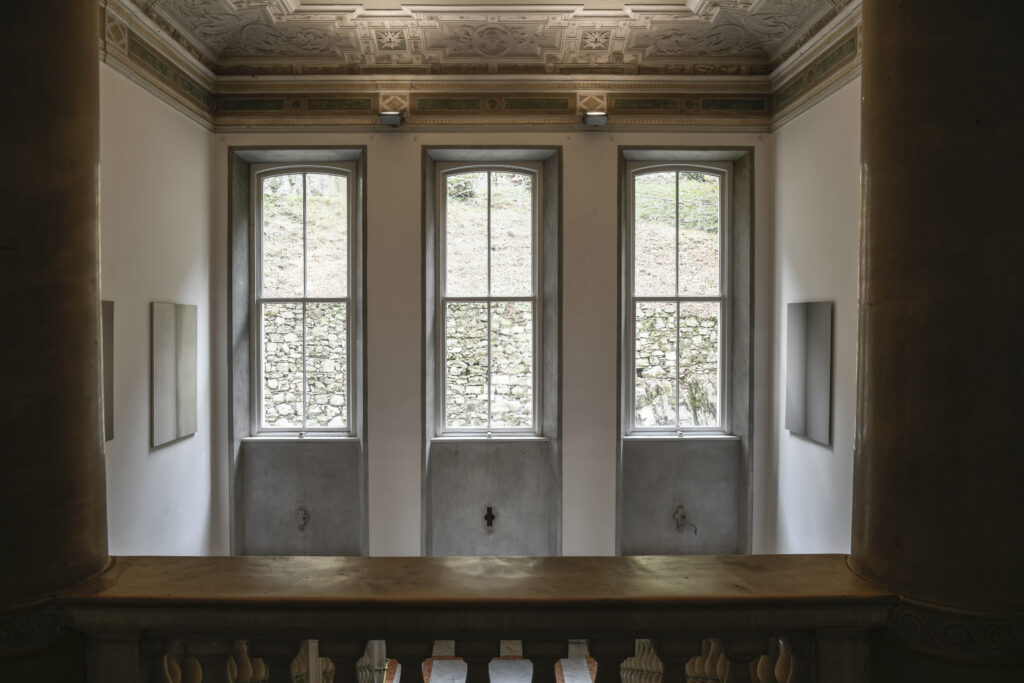
Another central chapter is the Contemporary Design Selection, curated for the fourth consecutive year by Giovanna Massoni and directed by Francesca Prandelli. For 2026, the exhibition moves to Villa Saporiti, introducing contemporary experimentation into the late eighteenth-century architecture overlooking the lake.
More than fifty participants from around thirty countries respond to Border through furniture, objects, textiles, ceramics, glass, metals, biomaterials and experimental processes.
Yet material experimentation represents only one level of the exhibition. The projects address broader questions around contemporary design: the relationship between craft and industry, authorship and participation, urban and rural environments, accessibility and exclusivity, control and unpredictability.
Particularly relevant is the emergence of the boundary between human and more-than-human worlds. Here, design becomes a means of negotiating relationships with ecosystems, materials and other forms of intelligence, shifting attention away from the object itself towards the systems of which it forms part.
When a boundary becomes a meeting point
Elsewhere in Como, the idea of the border becomes spatial.
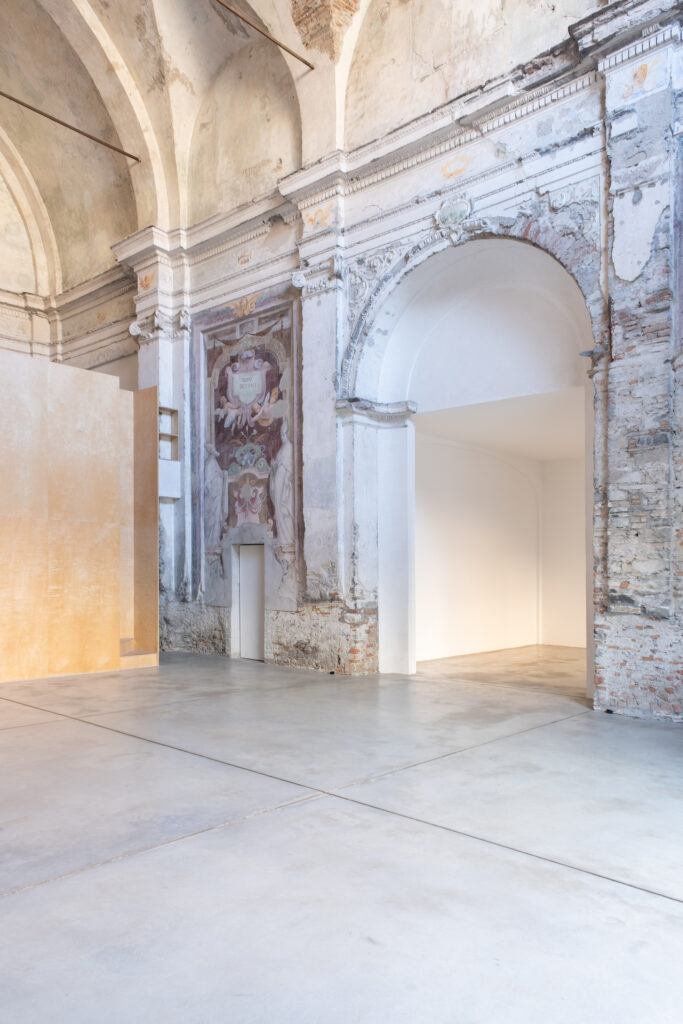
Inside the former Church of Santa Caterina, Nomade presents Fine Comune, developed under the creative direction of Ultrapresent Studio. Its title returns to the Latin origin of con-finis: a boundary understood as something shared, the point at which one territory ends precisely where another begins.
Works by Luca Monterastelli coexist with Acerbis’ Free System, pieces from Movimento Gallery and rugs by cc-tapis, transforming the former sacred architecture into a horizontal environment centred on encounter and coexistence.
The Ico Parisi Design Archive, meanwhile, reconstructs the dialogue between Ico Parisi and Giuliano Collina, tracing a collaboration that began in the 1970s and continued through the history of La Ruota. At the Como Conservatory, Atto Puro, curated by Ultrapresent Studio, brings together electronic music students and the Cosmos sound system in a continuously evolving listening environment.
Beyond Como
Perhaps the most consequential development of this edition, however, occurs outside the festival’s established geography.
The expansion into Lecco coincides with a new programme developed with the area’s higher education institutions, including the University of Insubria, the Como Conservatory, Accademia Aldo Galli / IED and the Politecnico di Milano’s Lecco Campus.
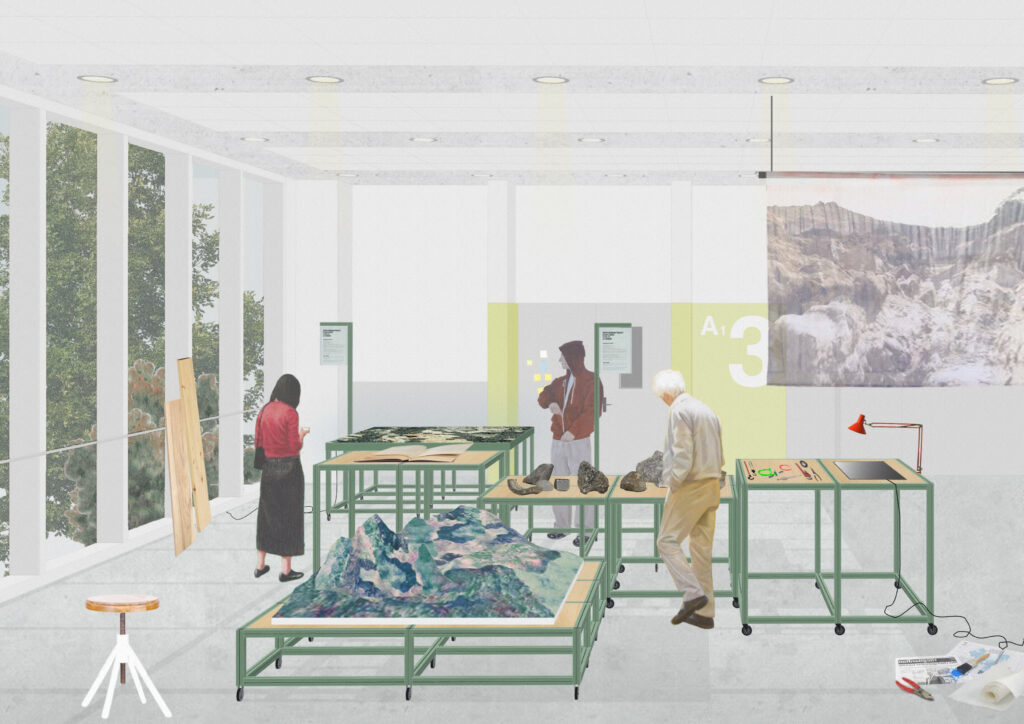
At the latter, Unstable Borders: Narrative Machines to Tell the Story of a Mountain in Motion makes the often invisible movements of Alpine landscapes perceptible through models, images and evolving data. Developed within the AMALPI MORE research project, the installation positions design between scientific knowledge and public storytelling.
Alpine Landscapes similarly considers the territory through material culture, focusing on local stone and the relationships connecting construction, craftsmanship and Alpine communities across Italy and Switzerland.
Meanwhile, Oltre al Vedere (Beyond Seeing) shifts the question of boundaries towards accessibility. Developed by Cultura Meccanica® for the Department of Mechanical Engineering at Politecnico di Milano with the Italian National Association for the Visually Impaired, the project translates visual experience into tactile and sonic forms. For the festival, this research is applied to Vico Magistretti’s Eclisse lamp, opening one of the most recognisable objects of Italian design to forms of perception beyond sight.
A festival that expands its own territory
The eighth Lake Como Design Festival ultimately uses Border not only as its subject, but as a method.
Its most interesting gesture may therefore be its refusal to remain within the boundaries that have historically defined it. The movement from Como to Lecco, the involvement of universities, the encounter between archives and emerging practices, and the coexistence of art, design, sound, scientific research and landscape all point towards a more distributed understanding of what a design festival can be.
Alongside the exhibitions, the Studio Visit programme will once again open studios, galleries, ateliers and archives across the region, while guided tours dedicated to Como’s Rationalist architecture reconnect contemporary experimentation with one of the territory’s defining architectural histories.
In 2026, the border becomes less a place at which something ends than one from which something else can begin. And across nine days, Lake Como Design Festival turns that threshold into a territory to inhabit.
Lake Como Design Festival — Border
12–20 September 2026
Como, Lake Como and Lecco