A new cultural platform near Venice brings together contemporary art, design and international creative dialogue.

Set within two historic villas near Venice, the inaugural exhibition The Shape of the Self / La forma del Sé, in collaboration with Cassina Projects, opens on May 9. Ca’ Riviera will also launch its first artist residency programme in summer 2026.
Launching on May 9, 2026, Ca’ Riviera is a new independent cultural destination founded by Leonardo Tiezzi and Riccardo Corò to foster dialogue between art, design and other aesthetic disciplines. Its debut exhibition, developed in collaboration with Cassina Projects, is titled The Shape of the Self / La forma del Sé and features works by Leonor Fini, Cecilia Granara, Yves Scherer, Chiara Capellini and Sedef Gali.
Derived from local dialect and toponymy, Ca’ Riviera takes its name from the Venetian Ca’, meaning “house” or “home,” a term historically associated with the grand palaces and residences of noble families, and riviera, from the Italian word indicating the land bordering a shoreline or watercourse. Set within two historic 16th-century villas in Mira, Veneto, along the Riviera del Brenta, Ca’ Riviera will open concurrently with the 61st International Art Exhibition of La Biennale di Venezia. Conceived as a year-round hub for arts and culture, the site will host artists, galleries, and international institutions through exhibitions, installations, and residency programmes developed in close dialogue with both local and global communities. Rooted in Venice while operating through an international perspective, Ca’ Riviera aims to become a new cultural destination in Italy — a home for the arts extending beyond the duration of the Venetian art calendar.


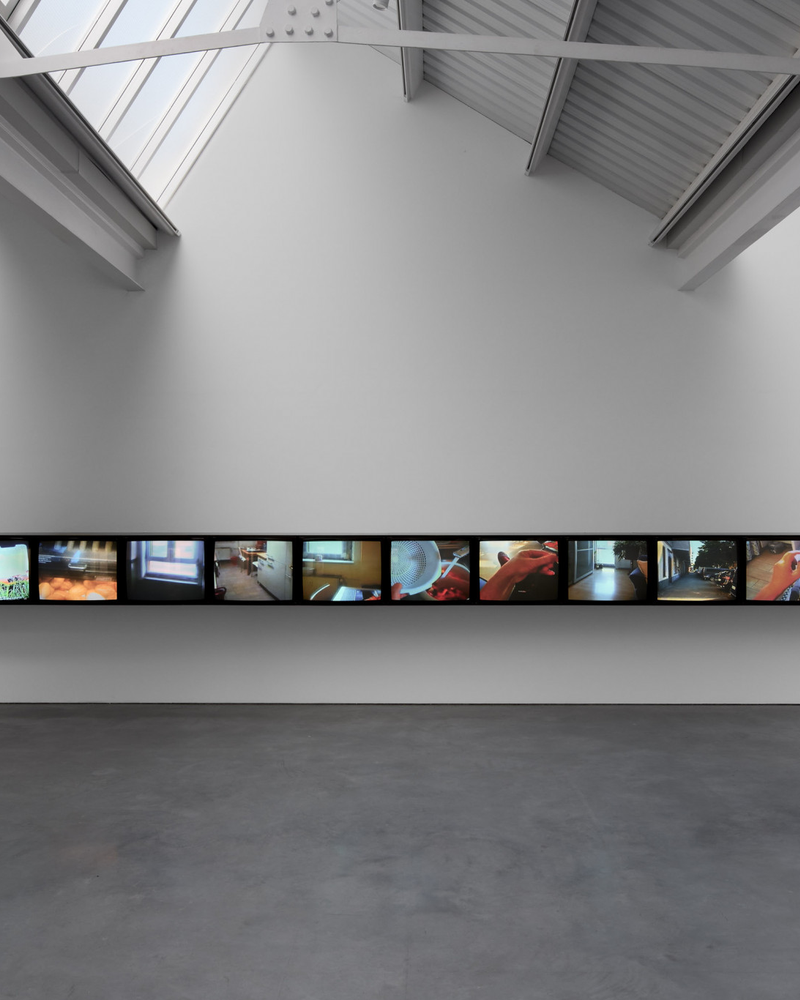
To inaugurate its space, Ca’ Riviera will present a group exhibition in collaboration with Cassina Projects. Titled The Shape of the Self / La forma del Sé, the exhibition brings together works by Leonor Fini (1907–1996), Cecilia Granara (b. 1991), Yves Scherer (b. 1987), Chiara Capellini (b. 1981), and Sedef Gali (b. 1990), exploring the redefinition of personal identity through their respective practices. Together, the artists render tangible the idea of an evanescent metamorphosis, establishing a dialogue between the avant-gardes of the twentieth century and the present.
The Surrealist artist Leonor Fini explored the self between 1945 and 1969 through works that stage the unconscious as what has been described as “a spell in the form of an autobiographical assertion,” expressing a constant tension to define and liberate the condition of being both a woman and an artist during her lifetime.
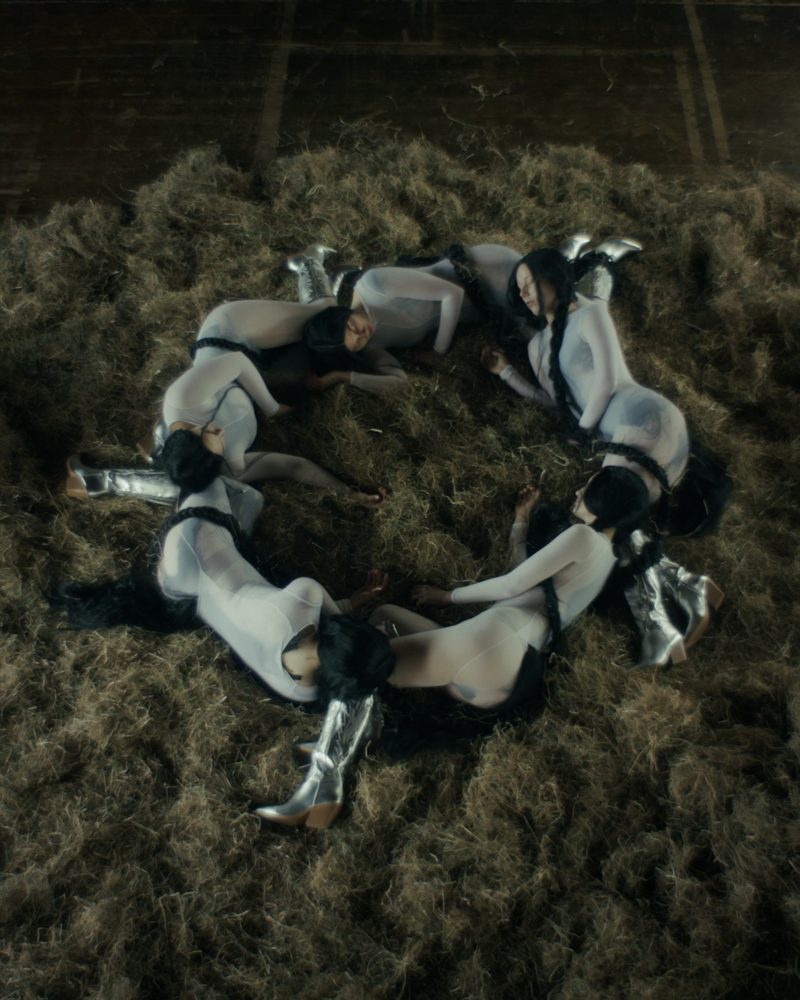
Cecilia Granara, meanwhile, gives painting a universal dimension, recalling spirituality and streams of consciousness. Her works project outward toward the viewer, forming a collective language through which the relationship between body and nature is explored via emotional states and moments of transcendence.
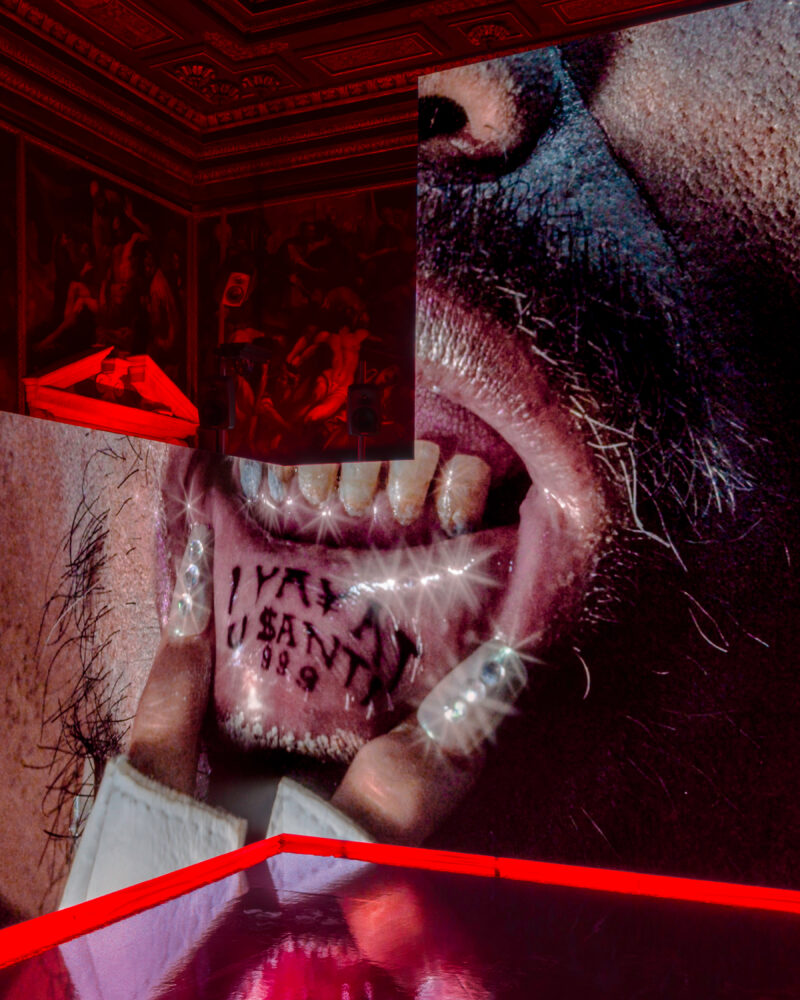
Continuing this reflection on identity, Yves Scherer focuses on the recording of reality, investigating the boundary between fiction and truth while analysing media culture and spectacle. His works reveal the continuous reshaping of images and meanings, transforming familiar idols into new narratives and highlighting the fluidity of the self in a present shaped by spectacularisation.
Throughout the exhibition, visitors will also encounter works by Italian artist Chiara Capellini and Turkish artist Sedef Gali, which will remain on permanent display at Ca’ Riviera. Though distinct in approach, their practices converge in an exploration of perception, emotion, and the unseen layers of reality. Through a series of paintings on floating organza, Gali’s works assume a suspended, almost immaterial quality in which colour and gesture dissolve into layers of translucency. This dissolution echoes the fluid and unstable nature of perception itself. Capellini’s contrasting approach adopts a rarefied and contemplative dimension, investigating the concept of the void as a field of potential rather than absence. Through site-responsive installations, her work inhabits space as a condition rather than an object, engaging the architecture, light, and material qualities of Ca’ Riviera to evoke states of suspension, indeterminacy, and latent presence. Together, the permanently installed works of Capellini and Gali establish a dialogue that reflects Ca’ Riviera’s commitment to fostering exchanges between diverse artistic sensibilities.
With this inaugural exhibition, Ca’ Riviera defines a new and highly personal curatorial direction, promoting lasting relationships between artists, galleries, and audiences within a context where heritage and contemporaneity coexist. In addition to the opening exhibition, Ca’ Riviera will launch a dedicated summer residency programme in August 2026, with further details to be announced.


Credits: Artistic Direction & Project Development by Marina Denora
CA’ RIVIERA founded in 2026 by Leonardo Tezzi and Riccardo Corò, is a house of arts and artists located in Mira, along the Riviera del Brenta. Conceived as a host and incubator for galleries, artists, and creatives, it offers a distinctive platform for exhibitions, installations, and residency-based projects, fostering dialogue and international exchange.
LEONARDO TIEZZI and RICCARDO CORÒ bring complementary backgrounds across design and communication. Riccardo works across product, spatial and conceptual design, curating site-specific installations that merge art and design, while Leonardo’s experience spans visual direction, PR and cultural strategy within the luxury and fashion sectors. Together, they share a commitment to fostering dialogue between art, design and contemporary culture.
CASSINA PROJECT Founded in 2016 in New York, Cassina Projects has developed an international, cross-generational programme connecting established, mid-career and emerging artists. Relocated to Milan in 2019, the gallery occupies a former 1920 aircraft factory transformed into a dynamic exhibition space. Combining industrial architecture with white cube elements, it hosts exhibitions, residencies and site-specific projects, fostering dialogue through collaborations with institutions, curators and critics.