A century after Alberto Savinio took up painting, the retrospective Souvenir at Pinacoteca Agnelli finds a polymath who looks as if he had been made for the present
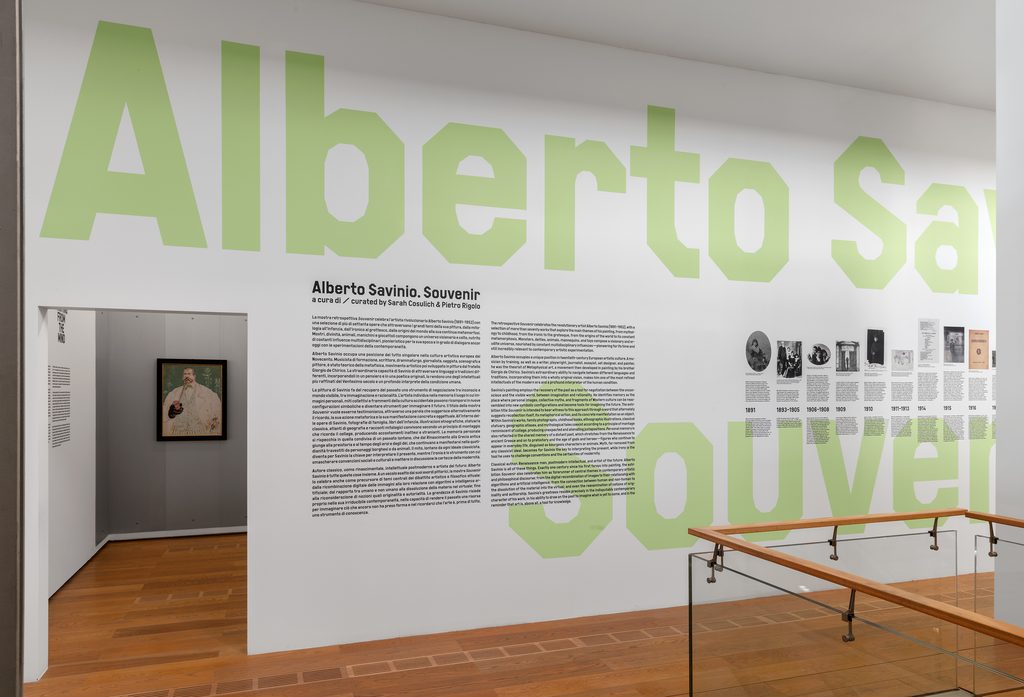
Alberto Savinio (Athens, 1891 – Rome, 1952) never thought of himself primarily as a painter. “I am a painter who is beyond painting,” he declared, and the remark has been read as the start of a long inquiry into the crisis of modern man, a creature fractured by a way of life on its way to becoming an assembly line. It is a pleasing irony, then, that his retrospective has landed at Pinacoteca Agnelli, on top of the Lingotto, the former FIAT factory in Turin, a building that once turned out cars along exactly that kind of line and whose rooftop test track is one of the great set pieces of industrial architecture.
His life and work bring to mind an old riddle. If a ship has its planks replaced one by one until nothing original remains, is it still the same ship? Roland Barthes gave the puzzle a Greek setting in the Argo, the vessel of Jason and the Argonauts, whose crew replaced every piece in turn until the ship was entirely new and yet kept its name and its shape. Savinio, who casts himself as an Argonaut in his poetic drama Hermaphrodito (1918), lived rather like that vessel, refitting himself as composer, novelist, set designer and, from 1926, painter. Souvenir marks a century since that last refit with some seventy-five paintings and drawings, curated by Sarah Cosulich and Pietro Rigolo with Raphaële Sevrain, and it stages the riddle in paint. Savinio assembled his pictures from images that already existed, so that every plank was borrowed and the ship is still unmistakably his.
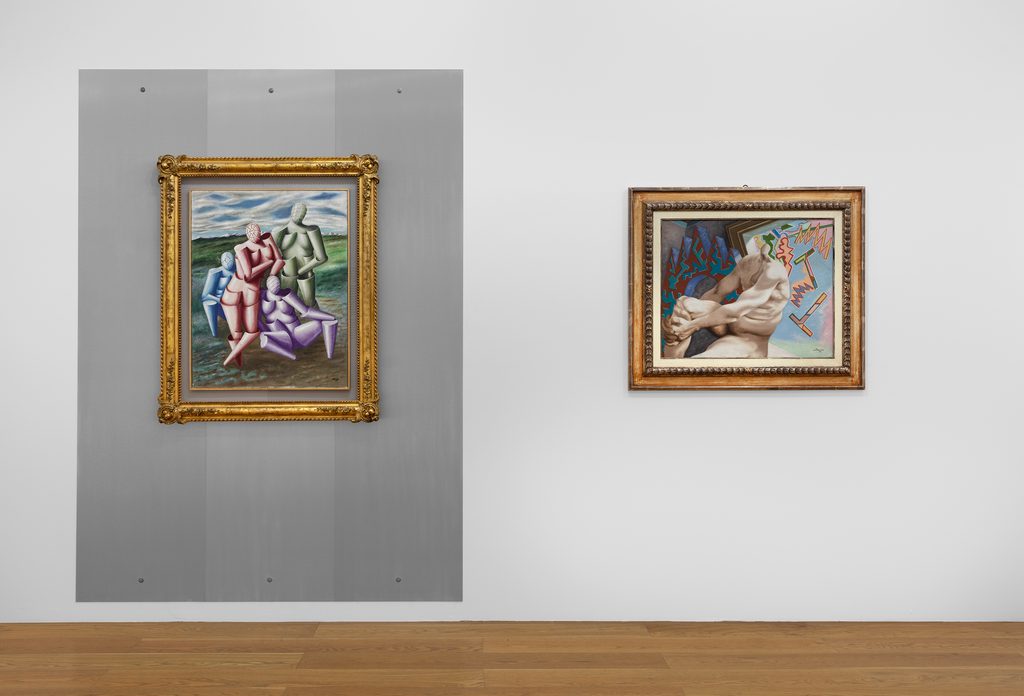
He began to paint in a world newly flooded with images, where print and photography had made pictures cheap and archaeology was filing antiquity into tidy repertoires, and a painter’s talent lay in choosing, rearranging and coaxing a fresh meaning out of old scraps, the very verbs that now hang over our own age of endless, reshuffled imagery, in which machines learn to assemble pictures from vast archives. In Savinio’s hands the scraps were quite literal, from a bit of lace set against a French train timetable in his first collages to the daguerreotypes and old photographs he later painted from, relishing how photography shrinks nature into a different, slightly false one. Promenade pompéienne (1925–26) makes a good example, with its ruins borrowed from the souvenir stand and modelled on plastic horses. The exhibition grasps all this and rhythmically hangs the works against aluminium panels, a material that sets their subjects offand projects the pictures into the contemporary era to which they seem to belong, while lending the rooms a cool, laboratory chill that suits a painter for whom every image was an object of study. The gamble pays off, and hybrids and mannequins that might have read as period curiosities step forward as if made for the present.
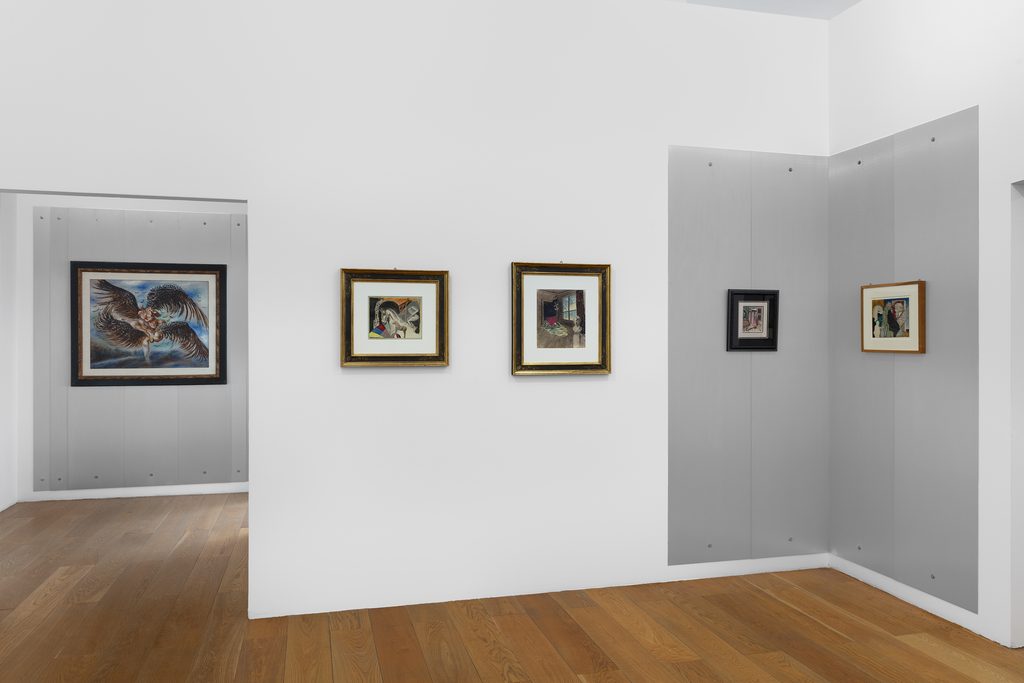
Assistant curator Raphaële Sevrain is happy to entertain the parallel with the present, the comparison with today’s learning machines, and precise about where it ends. Savinio, she explains, belongs to a long tradition of collage in which existing sources are copied and assembled until figures from distant epochs share one stage, a method that looks backward and forward at once. A machine inherits the biases of whatever archive fed it, waits for a prompt and tends to hand back what appears most often, while Savinio chose with open eyes. The machine is a superbly fluent librarian who hands you the most-borrowed book in the building, and Savinio is the reader who goes down to the basement for the one nobody has opened since the Italian Risorgimento.
Sevrain also notes that the artist anticipated the man-machine, writing about the automobile and the other means of transport that drove the technological revolution of his day, and that he granted the machine a more complete vision while warning against trusting it too far. Savinio, born in Athens, inherited that ambivalence along with the rest of his Greek legacy, for classicist Adrienne Mayor has traced myths of artificial beings in ancient Greece back some 2,700 years, from the bronze giant Talos to Pandora, and observes that none of them ends well once the made creatures mingle with humans. The artist carried that mixture of fascination and suspicion into the twentieth century, and the bestiary that fills the exhibition is where it comes to life. He carried that mixture of fascination and suspicion into the twentieth century, and the bestiary that fills the exhibition is where it comes to life, with bodies bearing animal heads, a centauromachy of hybrid pre-historic creatures that recall the Hydra of Learna (Bataille de Centaures, 1930) and mannequins that point to the absence of a human body. Anyone who has asked an image model to retouch the same image again and again has watched it curdle, pass after pass, into something sinister, and Savinio’s metamorphoses share that slow corrosion, except that his drift always had a direction, since he wished to humanise the beast and had no appetite for bestialising the man (an ambition that takes on a new edge now that we have built the beast ourselves).
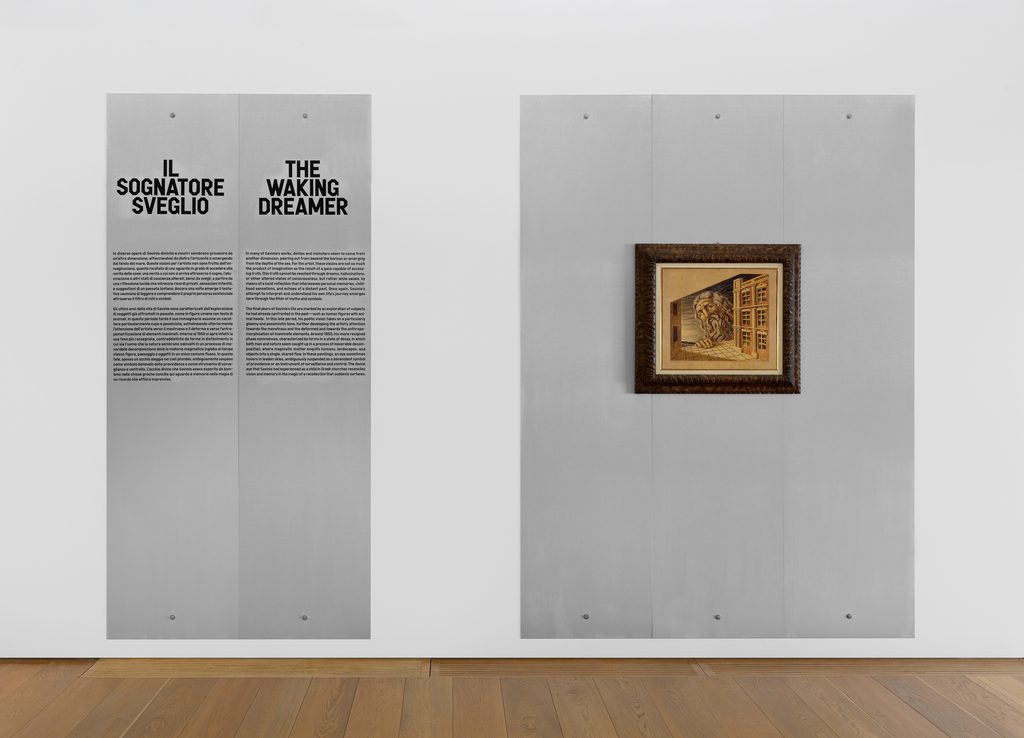
Why turn the human into something else in order to speak about the human at all? Savinio served as an interpreter in the First World War and concluded that stable values had migrated out of the present and into the past, so that beautifying that past became a way of fabricating the future, with irony and metamorphosis as antidotes to a degraded age. The corrosion works from within as well, as Monumento marino ai miei genitori (1950) shows, with a mother who becomes upholstered furniture, her blue ringlets coiling like a Gorgon’s, and a father who is a trunk of a man staring out of a single cyclopean eye. Savinio treated a portrait as a judgement and accused his fellow painters of smoothing every face into something agreeable, a charge that lands differently in front of machines that average faces into the most agreeable version of everyone.
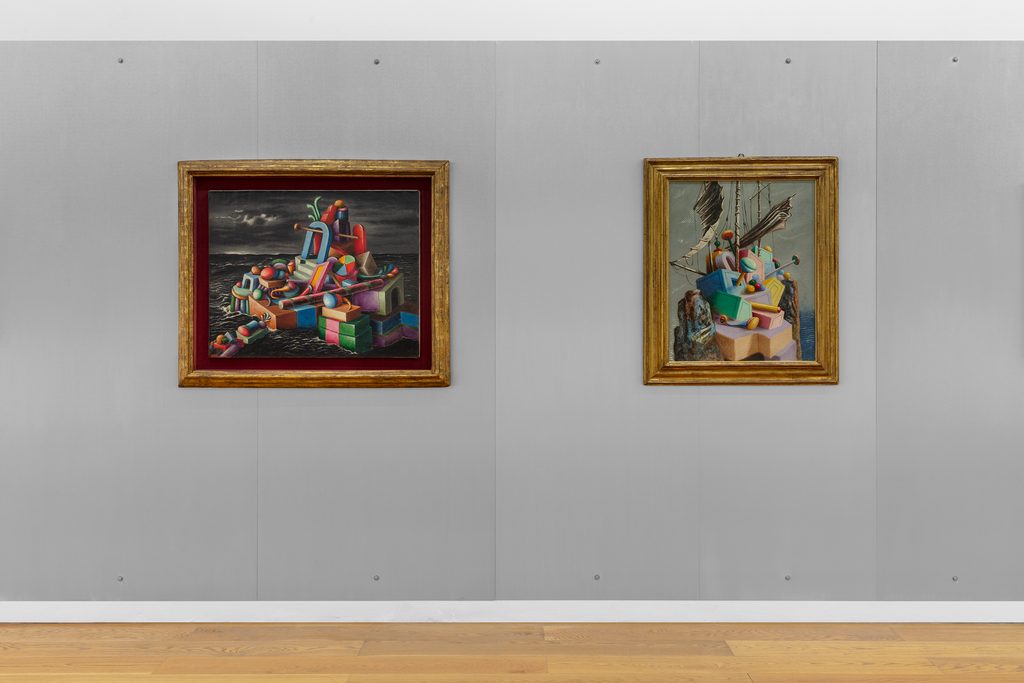
Seen in these rooms, Savinio looks like somebody who has been waiting in the present all along, and the exhibition deserves credit for knowing it. He set out to humanise the beast, and a century later it seems like the “beast” has learned to answer back in fluent paragraphs and plausible faces, which gives his hybrids, his borrowed images and his habit of asking who is really making a picture the ring of a description of our own days. A model can borrow from everything and miss nothing, whereas a souvenir, which gives this retrospective its title, is what we keep of a place we can no longer visit, and Savinio’s paintings are souvenirs in exactly that sense, which is perhaps why he feels so at home among us today.
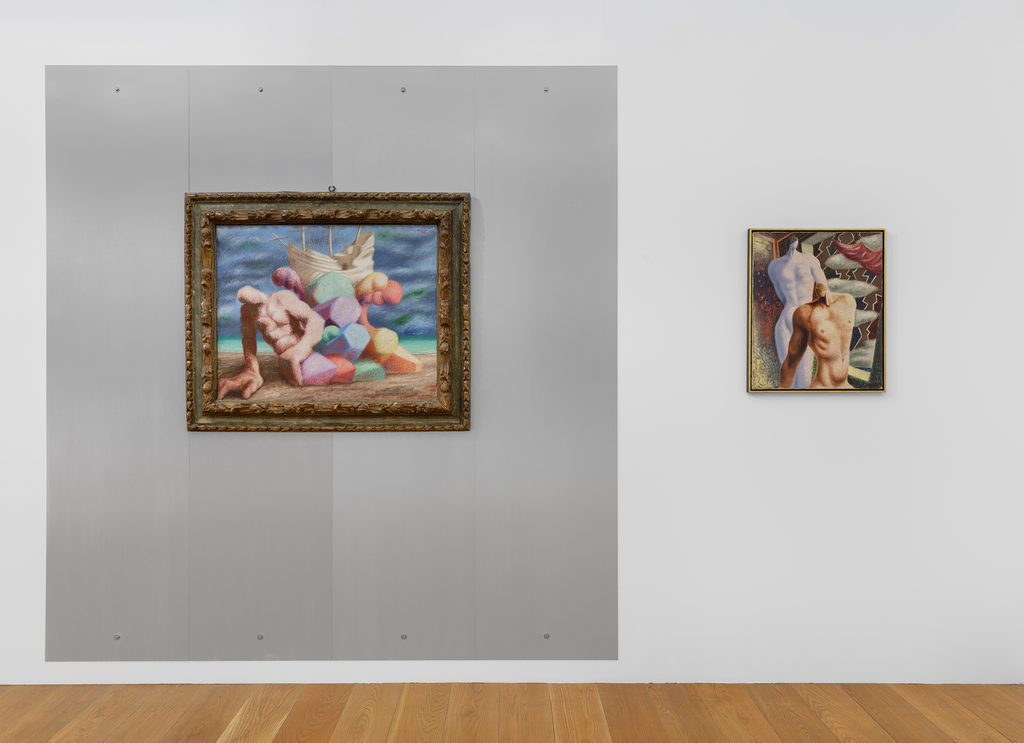
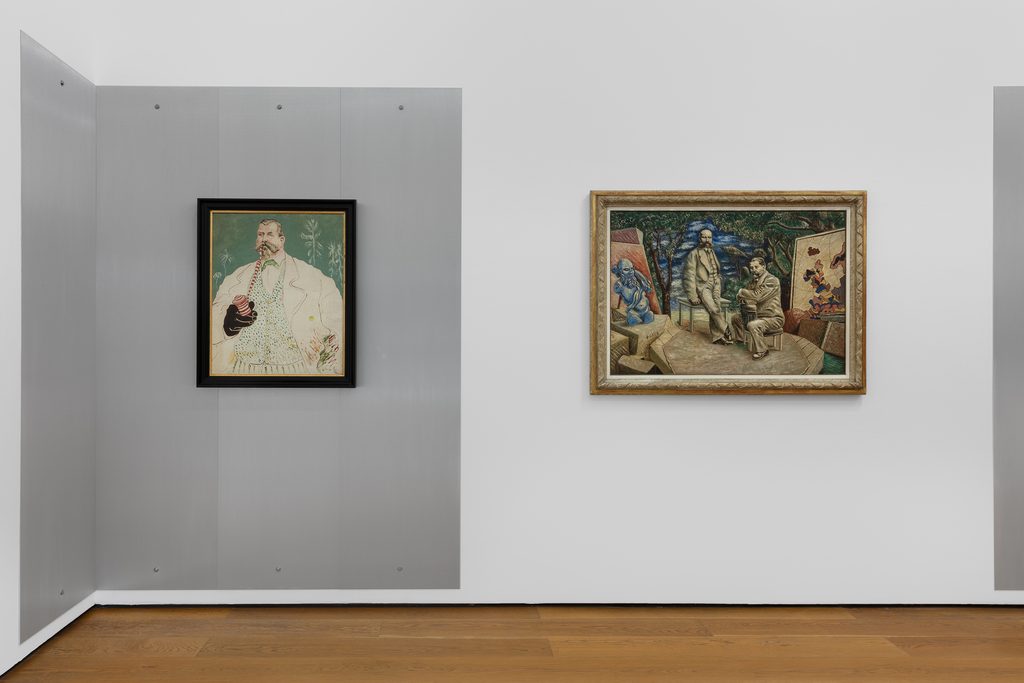
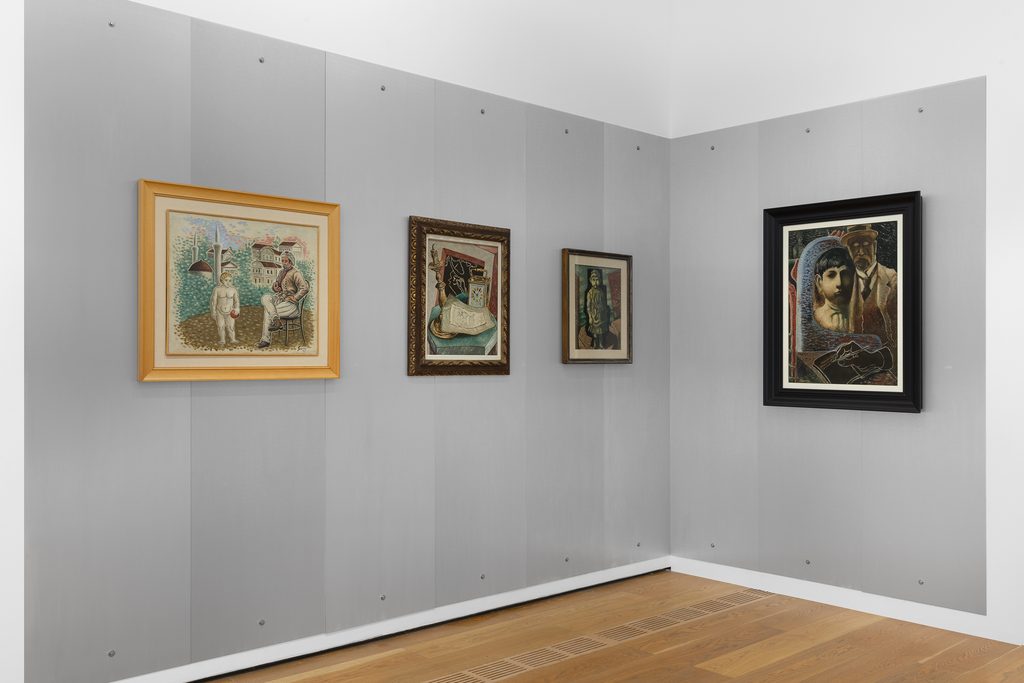
Alberto Savinio. Souvenir
Pinacoteca Agnelli, Turin
October 30, 2026 – April 4, 2027
Curated by Sarah Cosulich e Pietro Rigolo.
Credit: Pinacoteca Agnelli, Turin and PCM Studio
ALBERTO SAVINIO
(1891–1952) born Andrea de Chirico in Athens, was an Italian artist, writer, composer and intellectual. Brother of Giorgio de Chirico, he played a significant role in the theoretical development of Metaphysical painting. After studying music in Athens and Munich, he moved to Paris, where he became associated with Guillaume Apollinaire and the avant-garde. Although he experimented with painting early in his career, he began pursuing it seriously in 1926, holding his first solo exhibition in Paris the following year. His multidisciplinary practice encompassed painting, literature, music and theatre, exploring mythology, identity and the complexities of modern existence.